
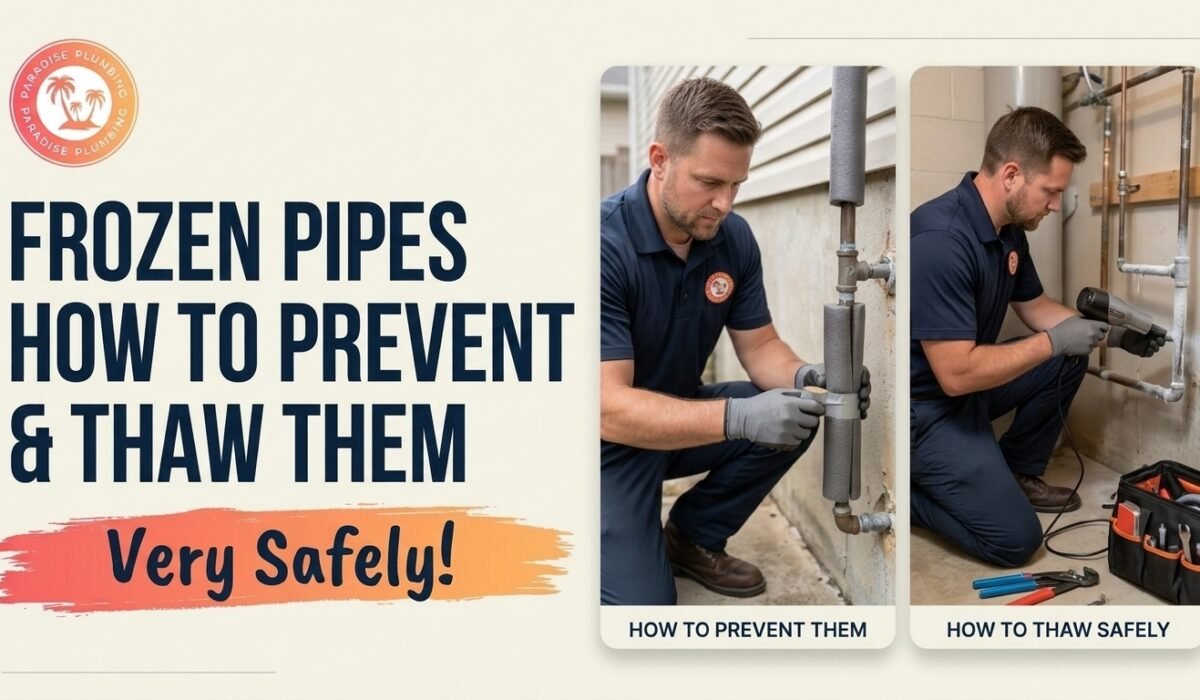
Truth Is That Nobody Thinks About Them Until Water Stops Flowing
It always happens on one of the most coldest days of the year.
Where you turn on a faucet expecting the water to gush out to you and instead only a trickle comes out. Sometimes nothing comes out at all.
And at first it feels like a minor inconvenience but oh boy then the real concern starts creeping in.
Because frozen pipes aren’t just about losing water temporarily as they are in fact about what can happen next.
Because as the water freezes it expands and if enough pressure builds inside a pipe then the pipe can burst open like a balloon turning your winter nuisance into a costly plumbing disaster.
And so in this blog we are going to see some of the frozen pipe prevention tips because they are far easier and far cheaper than dealing with repairs that can ruin your life and your wallet.
So Why Do Pipes Freeze In The First Place?
Well it’s simple because the pipes that are located in:
- Crawl spaces
- Garages
- Attics
- Exterior walls
- And in unheated basements
Are typically the most vulnerable.
Where when the outside temperatures stay below freezing for extended periods then the water inside these exposed sections will begin to turn into ice.
And as the ice expands it blocks the water flow and increases the internal pressure throughout the pipe.
That is why according to the Strategic Claim Consultants these frozen pipes are among the most common causes of winter related water damage in so many residential properties.
Here Are The Warning Signs That Usually Appear Before A Pipe Is About To Burst
A frozen pipe doesn’t always fail immediately and in fact it can show you the following things like:
- Reduced water pressure
- Frost on exposed pipes
- Unusual noises when faucets are turned on
- Water flow that suddenly stops
- And strange odors coming from drains
And so these are often the earliest signs of frozen water pipes and should never be ignored during the cold weather.
That is why the sooner action is taken then you have far better chances of preventing a burst pipe.
Insulation Just Do It Before It’s Too Late
One of the most effective forms of winter plumbing protection is simply by keeping your most vulnerable pipes insulated.
Why? Because the pipe insulation helps slow heat loss and reduces the chances of water reaching at its most freezing temperatures.
And so the most vulnerable areas where you need to do this include the:
- Exterior facing walls
- Under sink plumbing near the outside walls
- Garage plumbing
- And the crawl space piping
Plus even the most inexpensive insulation materials can provide a very meaningful protection during severe cold spells.
A Slow Drip Can Prevent A Big Problem Shocker Right?
I know I know that it sounds counterintuitive. And you might be saying like why would anyone intentionally leave a faucet dripping?
Well let me tell you because moving water freezes more slowly than standing water.
And so during extreme cold times allowing a small trickle of water to flow through your most vulnerable plumbing can help you reduce pressure buildup and lower the risk of freezing.
That is why this simple step is often the most recommended part of cold weather plumbing maintenance in regions that experience the harsh winter temperatures.
And if you don’t believe me then take a look at this fantastic piece by AOL where they swear by it.
Oh No Never Ever Use The Open Flames To Thaw A Pipe
When homeowners discover a frozen pipe a sense of panic sometimes leads to so many dangerous decisions.
Where they start using:
- Propane torches
- Open flames
- Charcoal heaters
- And direct fire sources
Please don’t because this can create serious safety hazards and not only can these methods damage your plumbing materials but they can also start house fires.
So when learning on how to thaw frozen pipes safely the goal is gradual and controlled warming and not the intense heat.
So What’s The Most Safer Ways To Thaw Frozen Pipes
Now if the pipe is accessible then you need to make sure to use the following things like the:
- Hair dryers
- Heating pads
- Warm towels
- And portable space heaters used at a safe distance
And so start heating near the faucet and work your way slowly towards the frozen section.
Oh and opening the faucet slightly during thawing can also help relieve so much pressure and encourage the water to move once the blockage begins to melt.
That is why patience is the key here folks because rushing this process often creates even more additional risks.
But What Should I Do If A Pipe Actually Bursts?
Okay so once a frozen pipe cracks then it is a race because every second matters.
And so your first step is to shut off the home’s main water supply immediately.
After that:
- Turn off the electricity if water is near electrical systems
- Remove standing water if safe
- Contact a plumbing professional
- And document any kind of visible damage
And then the final step is to call Paradise Plumbing because they will be at your doorstep in no time ready to fix things and make the problem go away for good.