Fresh water is not a luxury. It is essential that every home relies on every single day — to drink, cook with, wash with, and even safeguard appliances from. But in a lot of Long Island homes, the water coming out of the tap might contain more than just H₂O. There could be minerals, chlorine, sediment, and even trace contaminants that creep their way in. That is where a good water filtration system helps.
But here is the rub: not all houses need the same solution. What is adequate for one family is overkill — or a good deal short — for another. Selecting the right system is not a question of pulling something from a shelf at a hardware store. It takes a little knowledge of your water supply, the plumbing setup of your house, and what your household needs.
So, let us discuss it step by step.
Why Water Filtration Is Necessary in Long Island Homes
Long Island utilizes drinking water from aquifers below the earth. The water is safe and regulated, but it does not mean it is clean when it comes to your faucet. Most homeowners have complained of hard water, a taste of chlorine, or cloudy water that forms deposits on sinks and glassware.
Aside from being a nuisance, untreated water can cause actual harm overall:
- Appliance wear: Hard water accelerates the aging of dishwashers, water heaters, and washing machines.
- Pipe clogging: Minerals can clog pipes and lower water pressure.
- Health issues: While rare, some contaminants (like lead or nitrates) can show up in local water supplies.
- Use around the house: Nobody likes their coffee tasting like chlorine.
That is why installing a filtration system is not just a comforting thing. It is about maintaining your plumbing, your appliances, and your family’s health.
Step One: Evaluate Your Water
You may wonder what is in your water before you even consider filters. This step is like purchasing glasses without an eye test.
- Municipal supply customers: Contact your local water utility and request the annual water quality report. It summarizes what is being evaluated and in what quantity.
- Private well owners: You will need a professional test. Wells can contain bacteria, iron, or even pesticides in some places.
Now that you know what you have, then you can pair up the problem with the proper filter.
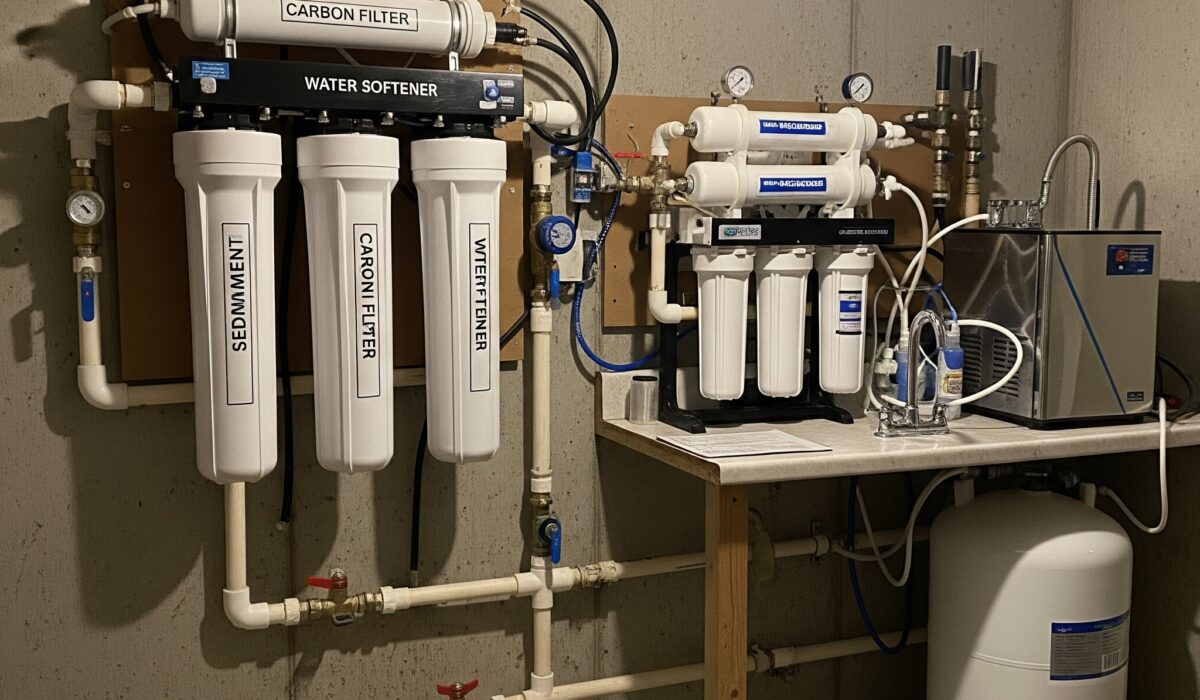
Common Types of Water Filtration Systems
This is where things get confusing. There are dozens of them to select from, all of which say they are the best. To make it easy, let us just examine the most common types of homeowners typically look at:
1. Whole-House Filtration Systems
These filter the water as it enters your house so every faucet — from the kitchen sink to the shower on the second floor — receives the advantage.
Ideal for: Houses with sediment, chlorine flavor, or overall hard water.
Pros: Safeguards appliances and plumbing enhances water quality throughout.
Cons: Higher initial investment, professional installation necessary.
2. Under-Sink Filters
Under the sink, these offer filtered water directly at the faucet.
Best suited for: Families most concerned with drinking and cooking water.
Pros: Neat, focused solution, improved taste right away.
Cons: Will not filter shower water or laundry machine.
3. Countertop Filters
Portable units that attach to the faucet or rest on the countertop.
Best for: Renters or temporary solutions.
Pros: Cheap, no significant installation.
Cons: Limited filtration, poorly streamlined-appearing, can be sluggish.
4. Reverse Osmosis Systems
These are industrial-strength under-sink models that push water through several membranes to eliminate even trace amounts of contaminants.
Best for: Households with severe contamination issues (nitrates, lead, etc.).
Pros: Very efficient, creates very purified water.
Cons: More costly, wastes a minor amount of water in the process.
5. Water Softeners
Technically not filters, although typically used in combination with them. They strip away minerals such as calcium and magnesium that induce hardness.
Works best too: Cure limescale deposits or appliance deterioration caused by hard water.
Advantages: Prolongs plumbing and appliance life, makes water “feel” softer on hair and skin.
Disadvantages: Does not eliminate other impurities.
How to Select the Right One for Your Home
Here is a quick outline to make the process less daunting:
- Find the most critical problem. Taste? Smell? Hard water stains? Clouding?
- Correspond with the issue. For chlorine taste, a carbon filter is the answer. For hard water, a softener. For a few, a whole-house unit would be cost-effective.
- Be considering future costs. Filters are replaced. Every 3 months, every year. Factor that into your budget.
- Take installation requirements into account. Reverse osmosis and whole-house systems need a plumber. Under-sink and countertop filters are DIY-friendly.
- Think about your lifestyle. If you just drink bottled water, an under-sink filter is sufficient. But if you cook, shower, and wash clothes frequently, a larger system is worth the investment.
Mistakes Homeowners Typically Make
- Cost-selecting. An inexpensive filter will not serve you if it does not address your water problem.
- Ignoring maintenance. Filters are only effective if they are changed on time.
- Buy more than you need. Some households have behemoth systems installed when a compact under-counter filter would have sufficed.
- Do the wrong parts yourself. A professional plumber must install whole-house systems. Installed incorrectly, they can lead to leaks or pressure problems.
Why Professional Expertise Matters
Yes, you can buy a filter online and do it yourself. But here is why hiring a plumbing professional — such as Paradise Plumbing — matters:
- Doing water testing properly: Not making an educated guess as to which filter will benefit.
- Right-sizing the system: Not wasting money on too-big systems.
- Done right installation: No leaks, no loss of pressure, no “oops” moments.
- Routine maintenance: Reminder and assistance for filter replacements, tests, and upgrades.
For Long Island residents in particular, a local expert is important. Your local plumber understands the idiosyncrasies of the water system and what fixes last long-term.
Call Paradise Plumbing today for a complimentary boiler consultation. Or visit your website to book your estimate online. We offer:
And much more. If you want to learn more about oil-to-gas conversions, look upon the following articles.
The Bottom Line
Selecting the right water filtration system is not so much about water that is cleaner in a glass. It is about healthy living, safeguarding your pipes, and feeling secure when you open a faucet.
If you are sick of guessing, getting a professional to evaluate your water and consult a pro is where you need to begin. From there, you will have a perfect picture of what system best suits your house, your family, and your pocketbook.
We serve Southampton, East Hampton, Shirley, Quogue, and nearby towns in Suffolk County. Contact now to book your consultation with us!
Because the objective is easy: clean, safe water that works for you — not against you.