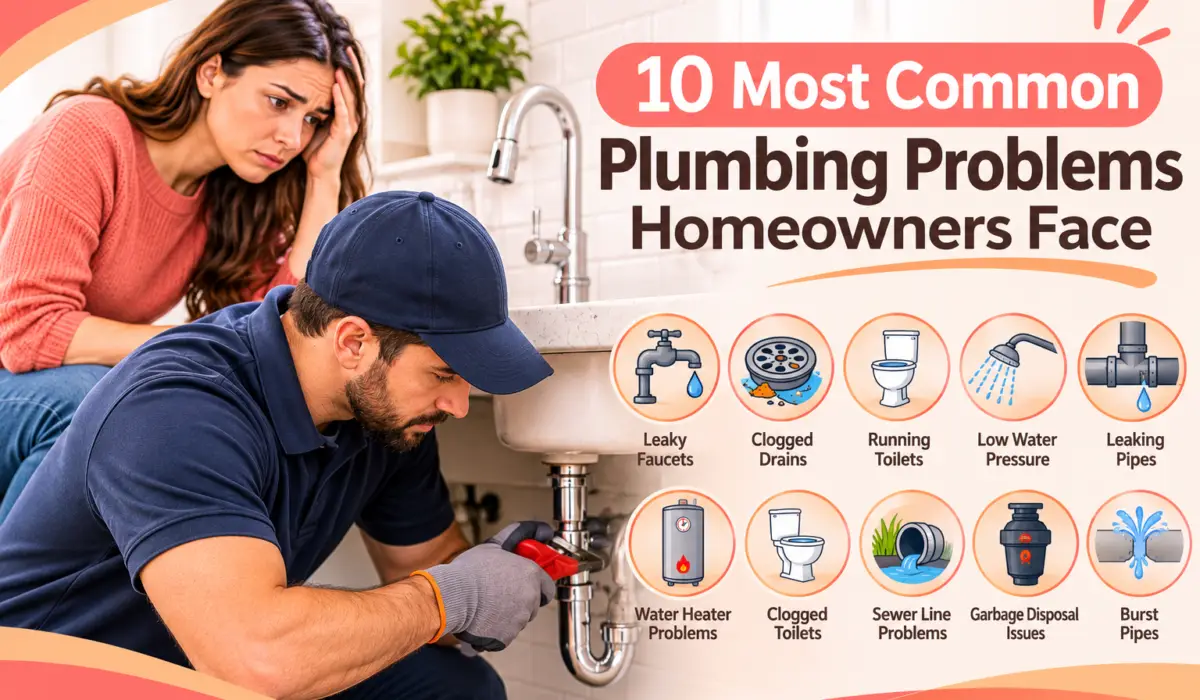
Plumbing problems can disrupt everyday household activities, damage property, and lead to expensive repairs when left unaddressed. Common issues include clogged drains, leaking faucets, running toilets, low water pressure, and water heater problems.
Understanding the warning signs and possible causes helps homeowners decide when basic maintenance is appropriate and when professional plumbing assistance is needed. This guide covers 10 common plumbing problems, their causes, and practical ways to address them.
Table of Contents
What Are the 10 Most Common Plumbing Problems?
Most household plumbing issues develop through everyday use, aging fixtures, mineral buildup, damaged components, or problems within the water supply and drainage systems. The following are 10 problems homeowners commonly encounter.
1. Clogged Drains
Common warning signs:
- Water draining slowly from sinks or bathtubs.
- Unpleasant odors coming from drain openings.
- Gurgling sounds when water flows through pipes.
- Water backing up into sinks or showers.
What can homeowners do?
Remove visible debris from accessible drain openings and use a suitable plunger for minor blockages. Avoid pouring chemical drain cleaners into pipes, especially when the plumbing material or blockage is unknown.
2. Leaky Faucets
A leaking faucet may appear minor, but continuous dripping can waste water and indicate worn internal components. Common causes include deteriorated washers, damaged cartridges, loose connections, and worn seals.
Common warning signs:
- Continuous dripping after turning off the faucet.
- Water collecting around the faucet base.
- Difficulty controlling water flow.
- Unusual sounds from the faucet handle.
What can homeowners do?
Check whether the faucet handle is properly closed and inspect accessible connections for visible leaks. Replacing a washer or cartridge may resolve certain issues, but the correct component depends on the faucet design.
3. Running Toilets
A running toilet continues allowing water to flow into the bowl or tank after flushing. The problem often originates inside the toilet tank, where a worn flapper, faulty fill valve, or incorrectly adjusted float prevents the water supply from shutting off.
Common warning signs:
- Water running continuously inside the toilet bowl.
- Frequent refilling sounds after flushing.
- Unexpected increases in water consumption.
- Water movement inside the tank when nobody is using it.
What can homeowners do?
Remove the tank lid and observe the flushing mechanism. Check whether the flapper seals properly and whether the float is positioned correctly. Replace damaged components with compatible parts.
- Weak water flow from faucets and showerheads.
- Reduced pressure at multiple plumbing fixtures.
- Pressure changes when other fixtures are used.
- Unexpected differences between hot and cold water flow.
What can homeowners do?
Check whether the issue affects one fixture or the entire property. Clean mineral deposits from removable aerators and verify that accessible shutoff valves are fully open.
5. Leaking Pipes
Pipe leaks can occur beneath sinks, behind walls, under floors, or in exposed plumbing connections. Aging materials, corrosion, excessive pressure, damaged fittings, and physical deterioration are common contributing factors.
Common warning signs:
- Wet patches on walls, ceilings, or floors.
- Visible corrosion or moisture around pipe joints.
- Musty odors in enclosed spaces.
- Unexplained increases in water bills.
- Reduced water pressure without an obvious explanation.
What can homeowners do?
Turn off the relevant water supply if a leak is accessible and contain escaping water. For an active or concealed leak, arrange professional inspection to identify the source and prevent further damage.
6. Water Heater Problems
Water heater problems can affect hot water availability throughout a home. Sediment accumulation, faulty heating elements, thermostat problems, damaged valves, and aging equipment can all contribute to poor performance.
Common warning signs:
- Water that does not reach the expected temperature.
- Hot water running out unusually quickly.
- Unusual popping or rumbling noises.
- Water leaking around the heater.
- Discolored or unpleasant-smelling hot water.
What can homeowners do?
Check the heater’s settings and inspect the surrounding area for visible leaks. Electric and gas water heaters have different components and safety requirements, so internal repairs should be handled by qualified professionals.
7. Clogged Toilets
A clogged toilet prevents wastewater from moving through the drain and sewer connection. Excessive toilet paper, non-flushable products, foreign objects, and obstructions in the drain line can cause blockages.
Common warning signs:
- Water rising unusually high after flushing.
- Slow drainage inside the toilet bowl.
- Repeated blockages after plunging.
- Water backing up into nearby plumbing fixtures.
What can homeowners do?
Use a toilet plunger designed for the fixture and avoid repeated flushing when the bowl is close to overflowing. A toilet auger may help with accessible obstructions. Persistent or recurring blockages require further inspection.
8. Sewer Line Problems
Sewer line problems affect the pipes that carry wastewater away from a property. Tree root intrusion, pipe deterioration, accumulated debris, ground movement, and structural damage can interfere with normal drainage.
Common warning signs:
- Multiple drains backing up at the same time.
- Persistent sewage odors inside or outside the property.
- Gurgling sounds from toilets and drains.
- Unusually wet or sunken areas in the yard.
- Repeated drainage problems despite routine cleaning.
What can homeowners do?
Avoid using affected fixtures if sewage is backing up. Professional plumbers can use appropriate inspection equipment, including sewer cameras, to identify the location and condition of the obstruction or damage.
9. Garbage Disposal Issues
Garbage disposal units can develop blockages, electrical problems, mechanical failures, or leaks around their connections. Incorrectly disposed food materials may also interfere with the unit’s operation.
Common warning signs:
- Unusual grinding or humming noises.
- Water leaking underneath the kitchen sink.
- Persistent unpleasant odors.
- The disposal failing to start or operate normally.
What can homeowners do?
Switch off the disposal and disconnect its power before performing any inspection. Consult the manufacturer’s instructions for resetting the unit or addressing minor problems. Never place your hand inside the disposal.
10. Burst Pipes
Burst pipes are serious plumbing emergencies that can release large amounts of water into a property. Freezing conditions, corrosion, excessive pressure, and structural damage can cause pipes to crack or rupture.
Common warning signs:
- Sudden water flooding in a room or basement.
- Rapidly falling water pressure.
- Visible cracks or water spraying from pipes.
- Unexpected water accumulation around plumbing lines.
- Unusual sounds behind walls or beneath floors.
What can homeowners do?
Shut off the main water supply immediately if it is safe to access. Keep away from water near electrical equipment, move valuables away from the affected area when possible, and contact a qualified plumber for emergency repairs.
What Causes Most Household Plumbing Problems?
Although plumbing issues vary, several underlying factors contribute to many residential plumbing failures. Understanding these causes can help homeowners recognize risks before they develop into expensive repairs.
| Underlying Cause | Potential Plumbing Problems | Preventive Measure |
|---|---|---|
| Mineral buildup | Low water pressure, clogged fixtures | Inspect and clean fixtures regularly |
| Pipe corrosion | Leaks, reduced flow | Inspect aging plumbing |
| Improper disposal | Clogged drains, toilet blockages | Dispose of waste correctly |
| Worn components | Leaking faucets, running toilets | Replace damaged parts |
| Excessive water pressure | Leaking or damaged pipes | Inspect pressure regulation |
| Freezing conditions | Burst pipes | Protect exposed plumbing |
Which Plumbing Problems Require Professional Help?
Some minor plumbing issues can be addressed with basic maintenance, but others require professional diagnosis and repair. Knowing the difference helps homeowners avoid worsening an existing problem.
| Plumbing Issue | Possible Homeowner Action | When to Call a Plumber |
|---|---|---|
| Minor drain blockage | Use a suitable plunger | When the blockage persists or returns |
| Dripping faucet | Inspect accessible components | When replacement or repair is needed |
| Running toilet | Inspect tank components | When internal parts remain faulty |
| Low water pressure | Clean faucet aerators | When several fixtures are affected |
| Hidden pipe leak | Contain accessible water | When pipes or walls are affected |
| Sewer backup | Stop using affected fixtures | Immediately |
| Burst pipe | Shut off water if safe | Immediately |
How Can Homeowners Prevent Common Plumbing Problems?
Routine maintenance can reduce the likelihood of many household plumbing problems. The following practices help protect fixtures, pipes, and drainage systems.
- Keep drains clear: Use drain strainers and remove accumulated debris.
- Monitor water pressure: Investigate unusual changes instead of ignoring them.
- Check for leaks: Inspect visible pipes, faucets, and connections periodically.
- Maintain water heaters: Follow the manufacturer’s maintenance recommendations.
- Use toilets correctly: Avoid flushing materials that can cause blockages.
- Protect exposed pipes: Insulate vulnerable plumbing in cold conditions.
- Address small issues early: Do not allow minor leaks or drainage problems to persist.
Frequently Asked Questions About Common Plumbing Problems
1. What is the most common plumbing problem in a home?
Clogged drains, leaking faucets, running toilets, and low water pressure are among the common plumbing problems homeowners encounter. Their frequency depends on fixture usage, plumbing age, and maintenance.
2. What are the warning signs of a plumbing problem?
Common warning signs include slow drains, dripping faucets, unusual pipe noises, water stains, unpleasant odors, low water pressure, and unexplained increases in water consumption.
3. Can homeowners fix plumbing problems themselves?
Some minor issues, such as cleaning faucet aerators or using a suitable plunger, may be manageable for homeowners. Hidden leaks, sewer problems, burst pipes, and complex fixture repairs generally require professional assistance.
4. Why do plumbing problems keep coming back?
Recurring plumbing problems may indicate an unresolved underlying issue, such as damaged pipes, persistent blockages, incorrect installations, or deteriorating plumbing components.
5. When should I call an emergency plumber?
Contact an emergency plumber when a pipe bursts, sewage backs up into the property, significant water flooding occurs, or a plumbing failure creates an immediate risk of property damage.
6. How often should residential plumbing be inspected?
Inspection frequency depends on the age, condition, and complexity of the plumbing system. Homeowners should monitor visible plumbing regularly and arrange professional inspections when they notice recurring problems or signs of deterioration.
Final Thoughts on Common Plumbing Problems
Household plumbing problems range from minor dripping faucets to serious sewer backups and burst pipes. Recognizing the warning signs, understanding common causes, and following appropriate maintenance practices can help homeowners protect their properties.
While basic maintenance can address certain minor issues, persistent leaks, recurring blockages, water heater failures, and major pipe damage should be evaluated by qualified plumbing professionals.
Need Help With a Plumbing Problem?
Whether you’re dealing with a leaking pipe, clogged drain, water heater issue, or another household plumbing concern, Paradise Plumbing can be your next point of contact for discussing your plumbing needs.